
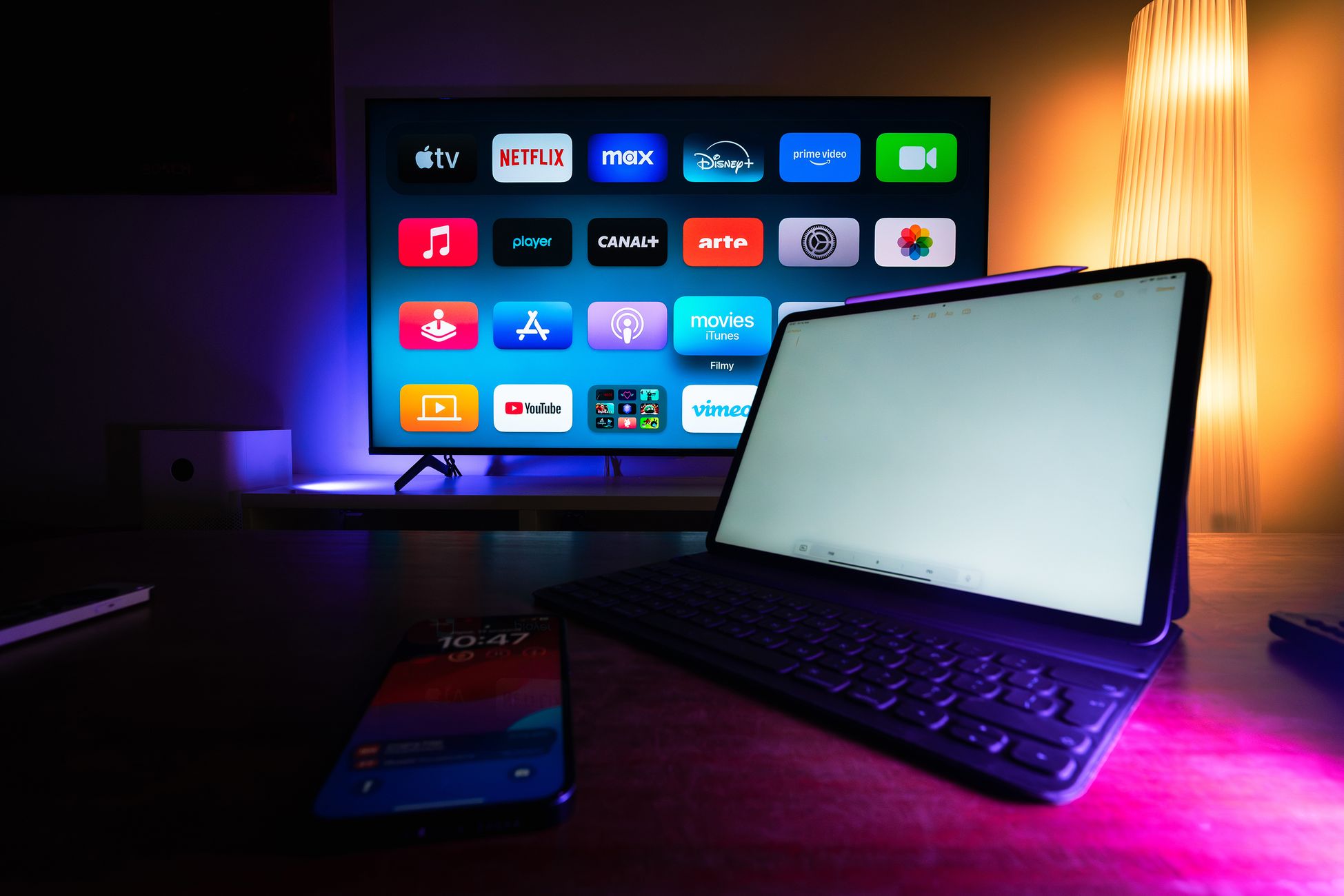
Picture where people watch YouTube. Most business owners imagine someone on a phone, thumbing through Shorts on a lunch break. That happens. But more and more, YouTube is on the big screen in the living room, playing through a smart TV while a couple sits on the couch together.
That changes who is watching and how. A homeowner researching a remodel is not alone on a tiny screen. They are next to their spouse, watching a ten minute video together, deciding who to hire. If your business is not on YouTube, you are missing the moment where a lot of household buying decisions actually get made.
YouTube Became Television
For years, people thought of YouTube as the thing you watch on your phone or laptop. That is no longer the whole picture. Nielsen's monthly reports on TV viewing have put YouTube ahead of the big subscription streaming apps on American TV screens. YouTube's own leadership has said that the TV is now the main screen for YouTube viewing in the US.
Smart TVs come with YouTube built in. Streaming sticks and game consoles put it one click away. For a lot of households, turning on the TV and opening YouTube is now as normal as turning on cable used to be.
That means your videos can be on the biggest screen in the house, watched with the sound up, by more than one person at a time.

Couch Viewers Watch Longer
Someone watching on a phone is usually multitasking. They are in line, on a break, or half paying attention to something else. Someone watching on the TV has decided to sit down and watch.
That makes the living room a great place for longer videos. A full walkthrough of a finished basement. A twenty minute explanation of what to know before putting in a pool. A tour of a new restaurant with the chef talking about each dish. People who would never sit through that on their phone will happily watch it from the couch.
And when two people watch together, they talk about it. "That looks great." "Should we call them?" That conversation is where the decision happens.
Shorts Show Up On The TV Too
It is not just long videos. YouTube shows Shorts on the TV app as well. The same vertical clips you post to TikTok and Reels can show up on someone's living room screen, in a feed they flip through like channels.
So even if you only make short videos, putting them on YouTube gets them a shot at the TV audience, which TikTok and Instagram mostly cannot reach. Each Short is also a doorway into your channel, where the TV viewer can find your longer videos.
The TV Audience Skews Toward Buyers
Think about who is on the couch watching YouTube in the evening. A lot of them are adults with homes, families, cars, and money to spend. They are researching projects, comparing options, and learning about things they are about to buy.
That is a different audience from the one scrolling TikTok at midnight. Not better or worse, just different, and for a lot of local service businesses, it is exactly the audience they want. Homeowners. Parents. People planning a big purchase.
If your content only lives on the apps people use alone on their phones, you are missing the household audience completely.
Older Viewers Are Watching Too
A lot of people over fifty never got into TikTok, and many rarely open Instagram. But plenty of them watch YouTube on the TV every day. Home improvement, cooking, car repair, travel, local news. It is their cable replacement.
Those are often the customers with the most spending power and the most loyalty. They are the homeowners with the big projects, the retirees with time to try new restaurants, the grandparents buying gifts. If your videos only live on the apps they never open, they have no way to find you. Some of them will call the number on screen before they ever visit your website.
What Plays Well On The Big Screen
A few things make a video work better on a TV. Clear sound matters more, because people hear it out loud in a room. A cheap clip on mic makes a huge difference. Horizontal video fills the screen, so longer videos should be filmed sideways when you can. Good lighting and steady shots matter more on a large screen, where every shake is magnified.
Most of all, the video needs a clear title. TV viewers often find videos through search and suggestions, and typing on a TV remote is painful, so short, plain titles that match what people look for work best. "What A Full Kitchen Remodel Costs In 2026" will get found. "Big Project Update!!" will not.
Long Videos Feed Every Other Platform Too
The longer videos you make for the TV audience also solve a problem on every other platform. A ten minute walkthrough of a finished project can be cut into eight or ten short clips. Each of those goes to TikTok, Reels, Shorts, and Facebook. The long version lives on YouTube and Rumble for the couch viewers, and the clips point the phone viewers back to it.
One afternoon of filming becomes weeks of posts across every platform, with the full story waiting on the big screen for anyone who wants it.
One Library, Every Screen
The good news is you do not need to make content just for TV from scratch. The videos you are already making can reach the TV audience if they are on YouTube.
Your short clips go up as Shorts. Your longer walkthroughs, explanations, and tours go up as regular videos. Rumble has TV apps too, giving the same content another path into living rooms. Meanwhile, the same videos keep working on TikTok, Instagram, Facebook, and Reddit for the phone audience.
That is the advantage of posting everywhere. Every screen your customers use, from the phone in their pocket to the TV on the wall, has a chance to show them your work.
Your Channel Page Is Your TV Storefront
When someone on the couch clicks into your channel, the TV shows them your channel page full screen. Your banner, your name, your latest videos, and your playlists, all in big tiles across the screen.
Take ten minutes to make that page look right. Use a clear banner with your business name and what you do. Organize videos into simple playlists, like "Finished Projects" or "Common Questions." Make sure your most recent uploads are not three years old. Upload a custom thumbnail for each video, too, because blurry frames picked automatically look even worse on a big screen. On a phone, a messy channel page is easy to ignore. On a sixty inch screen, it is the first impression.

Check Your YouTube Channel Tonight
Open YouTube on your own TV tonight and search for your business, or for what you do in your city. See what comes up. If your channel is empty, out of date, or not there at all, that is a screen your competitors might already own.
Start by putting every video you have already made on YouTube, short and long. Give each one a clear title. Then keep adding to it every week, because once a video is on YouTube, it can be found from the couch for years.
