
You Attend Every Industry Event And Post From None

You go to the trade shows. You sit through the certification days. You show up at the regional meetup where everyone in your industry within two hundred miles stands around holding a drink and complaining about the same three suppliers. You spend the money, take the days off, drive the distance.
Then you come home with a bag of pens, a few business cards, and zero content.
Everybody else at that event is doing the same thing, which is why the whole industry stays invisible. Meanwhile there is a version of you that films four things at every event and comes home with a month of posts, and that version looks like the person who is everywhere in the industry, because visibility and activity are indistinguishable from the outside.
Events Give You The One Thing Your Feed Lacks
Your normal content has a location problem. It is always the same shop, the same truck, the same wall behind your head. Viewers get used to it and their attention drifts, and the algorithm notices attention drifting.
An event is a new set. New background, new noise, new people, new stakes. That novelty alone lifts performance on every platform, before you have said anything interesting. Add the fact that you are surrounded by things your customers have never seen, new equipment, new products, competitors' booths, demonstrations, and you have a location where filming is trivially easy.
Four clips per event. That is the bar. The walk in, showing the scale of the place. One new thing you saw and what you think of it. One thing you disagree with that somebody on stage said. One thirty second recap on the drive home about what you are actually going to change because of the trip.
That is ten minutes of filming spread over two days, and it produces more content than the two weeks after the event, when you are back in the same room with nothing new to say.
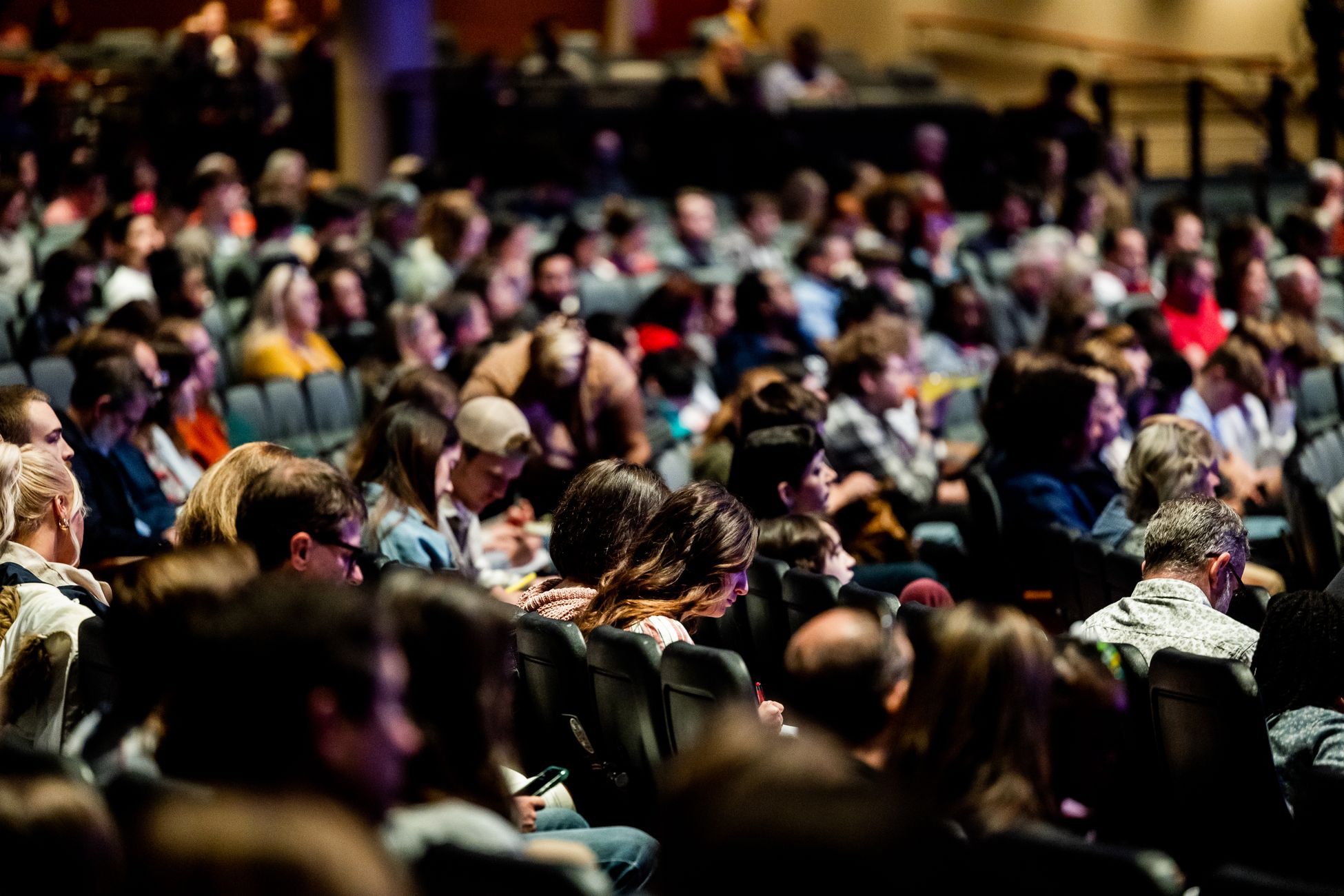
Your Customers Do Not Know This World Exists
Here is why event content works on people who will never attend one. It reveals an industry your buyers assumed was simple. They think you show up and do the thing. They have no idea there is a whole ecosystem of training, standards, competing methods, arguments about which product is better, and annual events where professionals go to figure it out.
Showing them that ecosystem does something no testimonial can. It positions you as somebody embedded in a field, not somebody with a truck. A prospect who watches you disagree with a speaker about technique has learned that there are techniques, that they vary, and that you have a considered opinion. That is worth more than a hundred before and after photos.
It also does recruiting work, and supplier work. The people at that event are watching too. Showing up in their feeds with content from a show they also attended makes you the known quantity in the room next year.
Where Event Content Actually Belongs
Post it to one app and you waste most of it, because event content splits cleanly across platforms in a way normal content does not.
The walking-in clip and the quick reactions are short form. TikTok, Reels, Shorts. Fast, visual, high discovery.
The longer breakdown of a new product and whether it is worth the money is YouTube. That is a search query. People type the name of that product and the word review for years afterward, and there is almost never good content from an actual operator, only from the manufacturer.
The recap for your local audience is Facebook. Your customers care that you went, and it reads as investment in the work.
The opinionated take on the thing you disagreed with is Reddit. That is exactly the kind of post that gets four hundred comments in an industry subreddit, and every one of those commenters is a peer or a potential referral source.
Rumble picks up the longer stuff and keeps serving it to an audience that does not overlap with the others at all.
Same four clips. Different jobs. Seven feeds. You did the driving already.

The Excuse And Why It Is Wrong
The reason you do not film at events is that it feels self-conscious. You are surrounded by peers. Holding a phone up and narrating feels like cosplaying as an influencer, and there is a real fear that the guy from the competing shop sees you doing it and smirks.
He might. He also will not be in anyone's feed next month, and you will.
The self-consciousness also fades fast, because at every event there are now three or four people filming, and nobody cares. The bigger risk is not that you look silly, it is that you spent two thousand dollars and three days on something that produced no evidence you were there.
The Real Failure Comes After The Drive Home
Say you do it. You film your four clips, you feel good about it. Then you get back Monday to a week of backed-up work, and the clips sit on your phone while you dig out. By the time you surface, the event is three weeks stale and posting it feels pointless, so you do not.
That is the actual reason event content does not happen. Not the filming. The window between filming and publishing, which is exactly when you are least available.
The fix is to make publishing not require you. Film the clips, hand them off, let them land across every platform while you are catching up on real work. The content goes out while the event is current, and it goes out everywhere, and you never sat at a laptop resizing a vertical video into a square one.
What Not To Film At An Event
There are a few ways to get this wrong, and they are worth naming because one bad instinct can make the whole thing feel cringeworthy and stop you from doing it again.
Do not film other people without asking. That includes booth staff mid-pitch, attendees in the background of a close shot, and especially anything that looks like you are secretly recording a conversation. Ask, and almost everyone says yes, because they are at a trade show to be seen.
Do not film a competitor's booth to mock it. It reads badly, it travels in your industry faster than you expect, and it makes you look small. Filming a competitor's product to assess it honestly is fine and useful. Filming it to sneer is a different thing and people can tell the difference immediately.
Do not film the sessions themselves in long unedited stretches. Nobody watches forty minutes of a slide deck shot from row twelve. Your thirty second reaction to one idea from that session outperforms the entire recording.
And do not wait until you have something profound to say. The walk through the entrance on day one, filmed while you are still figuring out where you are going, is better content than the considered summary you will script in your head and never actually record.

The Next One Is On The Calendar
There is an event coming. You already know when it is, you probably already paid. Add one line to your prep list: four clips.
Walking in. One new thing. One disagreement. One drive-home recap.
Then let all four of them go to every platform where your customers and your peers are already spending their evenings. The trip is a cost either way. Whether it also becomes a month of visibility across seven feeds is the only variable you control, and it costs you ten minutes on site.
Everybody in your industry is going to the same events and coming home with the same bag of pens. Almost nobody is coming home with the footage.
