
Your Showroom Samples Have Never Been Filmed Once

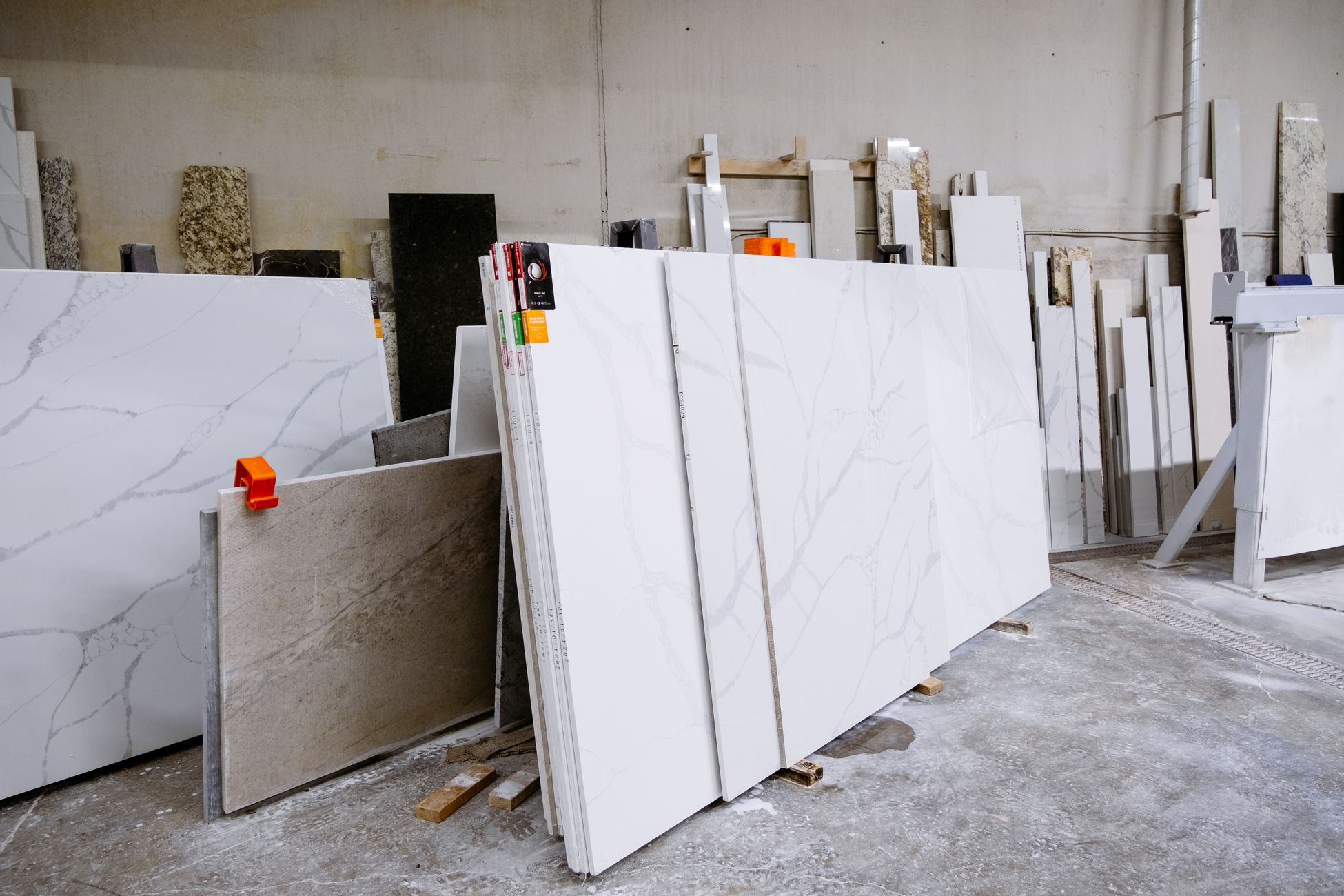
There is a wall of samples in your showroom. Tile, countertop slabs, flooring planks, fabric swatches, cabinet doors, paint chips, whatever your trade runs on. Customers walk in, run their hands across it, hold two options up to the light, ask which one holds up better. You have that conversation five times a day.
Every one of those conversations is content. The samples are the most photographable thing in your business. And unless someone walks through your door, they do not exist.
You built a showroom so people could see the options before they buy. That was the right instinct. But the showroom only works on people who already drove to you. The people still deciding whether to drive to you are at home, on their phone, looking at somebody else's samples.
The Sample Wall Is A Content Library Standing Still
Count what is on that wall. Forty tile options. Twenty slabs. Fifteen flooring lines. Each one is a video. Not a fancy one. A ten-second clip of the sample in your hand, tilted so the light catches it, with a line about what it is and what it costs.
That is seventy-five clips from one wall, and you have not done anything except pick each one up.
Now add the comparisons. This one next to that one. The budget option next to the premium option. The one everyone asks about next to the one that actually lasts. Every pairing is another post, and comparisons are what people are actually searching for when they are trying to decide.
Then add the questions. Every question a customer has asked you in the showroom is a clip where you answer it with the sample in frame. Does this scratch. Does this stain. How does this look in a small room. You have answered them hundreds of times. Answer them once on camera.
Why Sample Content Outperforms Finished Work
Most businesses in your space post finished installs. The completed kitchen, the new floor, the done deal. Those photos are fine, but they all look the same. Every competitor has them and every one looks like a stock photo.
Samples are different. A close shot of a material, in hand, in real light, with someone explaining what it is, feels like information instead of advertising. It is the part of the buying process that customers are actually stuck on. They know they want a new floor. They do not know which floor. The person who helps them figure that out is the person they buy from.
Filming the samples puts you in the decision before anyone else is in the room.
Where Each Clip Goes
A ten-second sample clip is a TikTok, an Instagram Reel, and a YouTube Short. Three feeds, three audiences, one clip.
A two-minute comparison of your three most popular options is a YouTube video. That one gets found by everyone searching for those materials by name, for years.
A photo of the sample wall with a caption asking which one people would pick goes on Facebook, where it gets comments and shares from people who are about to renovate and did not know you existed.
The honest breakdown of what holds up and what does not goes on Reddit, in the home improvement communities, where people are begging for exactly that answer from someone who handles the material every day.
The same clips go to Rumble, where nobody in your trade is posting and the audience is wide open.
One sample wall. Seven platforms. Months of posts. Nothing new to build.
The Showroom Reaches One Zip Code
Think about who actually visits. People within a reasonable drive who already found you through a search or a referral and decided you were worth the trip. That is a small number, and it is a number that already had a reason to choose you.
Now think about who searches for the materials you sell. Everybody planning a renovation, anywhere, at every stage. The person six months out who is just looking. The person who has a quote from someone else and wants a second opinion. The person who cannot decide between two options and is hoping someone will just tell them.
The showroom gets the first group. Video gets all three. And the second and third groups are far bigger than the first.

This Is Not A Production Problem
The reason the samples have never been filmed is not that it is hard. It is that nobody decided it was somebody's job. The showroom staff are there to sell. The installers are out on jobs. The owner is doing everything else. So the wall stands there, fully stocked, and nobody points a phone at it.
Fix that with one rule. Every time a sample gets picked up for a customer, it gets picked up for the camera afterward. Ten seconds. Whoever is closest does it. The clips go to one folder at the end of the day.
From there, one person cuts and captions them, and a system takes each one to every platform without anybody touching seven apps. That is the whole workflow. It costs a few minutes a day and it turns a wall of inventory into a feed that never runs dry.
Your Rep Already Sent You The Material
Here is something else sitting in your inbox. Every supplier you work with sends product photos, spec sheets, sometimes video. They want you to sell their line. They have already produced the content.
Use it. Post the supplier's clip with your own take on it. Hold their sample up next to a competitor's and say which you would pick. Their marketing budget just became your content pipeline, and you did not pay for any of it.
And when you post it in seven places instead of one, the supplier notices. Reps pay attention to the dealers who move product online. That turns into better pricing, earlier access, and sometimes co-op money for the exact content you were already making.
The Customer In The Showroom Is Content Too
The next time someone is standing at the wall going back and forth between two options, ask if you can film the conversation. Most people say yes. What you get is a real customer, with a real dilemma, and you helping them solve it.
That clip does more than any sample shot on its own. It shows how you work with people. It shows the questions that come up. It shows that customers actually walk in and buy. Strangers watching it see themselves in the decision, and they want the same help.

The Wall Was Built For This
You did not buy those samples to look at them. You bought them so customers could compare, decide, and buy. The wall exists to close.
It can close from a phone screen just as well as it closes from across the counter. It just has to be filmed, cut into pieces, and put where people are actually looking. Right now that is seven platforms, and your samples are on none of them.
Pick one up. Hit record. Send it everywhere.
