
Your Shop Dog Has More Fans Than Your Brand Has Online
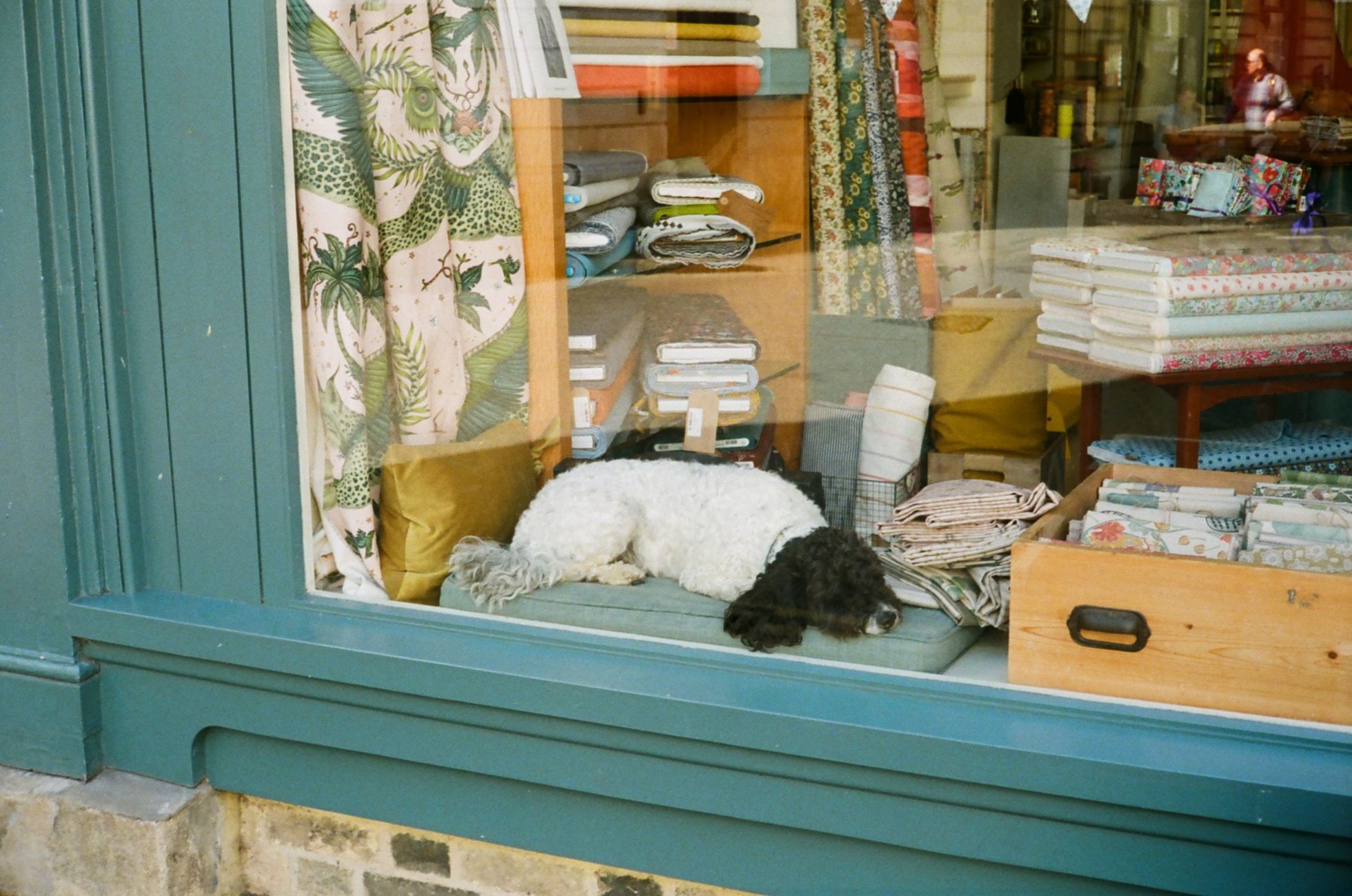
Somebody walks into your shop for the first time in two years, and the first thing out of their mouth is not about the job. It is "Where's Biscuit?" They remember the dog's name. They do not remember the name of your business without checking the receipt.
That tells you exactly what people connect with, and it is almost never the thing on your feed.
Go look at your business page right now. A logo, a promo graphic, a holiday hours post, and a stock photo of a smiling family that has never set foot in your building. Meanwhile the most memorable thing about your place is asleep on a dog bed behind the counter, and it has never once appeared online.
The Dog Is Doing Your Marketing For Free
Think about why people bring up the dog. It is the detail that makes your place feel like a place. A hardware store is a hardware store. The hardware store with the old lab who follows you down the paint aisle is the one you tell your brother-in-law about.
That is word of mouth in its purest form, and it happens in your building every day without any effort from you. Customers bring their kids to see the cat. Regulars show up with treats in their pocket. Somebody's toddler asks to go to the dog store when they mean your auto parts counter.
Every one of those moments is a story people are already telling about you. The only place it is not being told is the one place you control.

Why Your Feed Gets Skipped And The Dog Does Not
People follow people and animals. They tolerate brands. Logos and promos read as advertising, and everyone scrolling has spent years training their thumb to fly past advertising without registering it.
A dog sprawled across a stack of tire boxes does not read as advertising. It reads as a moment. People stop, they smile, they send it to someone. That share is the thing every algorithm is built to reward, and a sale graphic will never earn it.
There is a second effect that matters more. Someone who follows your shop because of the dog is following you before they need you. They are not shopping, they are watching a dog.
Six months later, when their water heater goes or their brakes start grinding, the business they already feel like they know is the one they call.
It Is Bigger Than The Dog
Not every shop has a dog. Every shop has personality, and the dog is simply the easiest example of it.
For some places it is the cat who sleeps in the front window. For others it is the regular who has come in every Tuesday for years and has an opinion about everything. It is the radio that only plays one station, the wall of photos from every customer's first fish, the bell over the door that sticks, and the running joke between your two longest-serving employees.
These are the things that make people say you have to go there. None of them is a logo, and none of them costs anything to film.
Make a quick list of what people mention when they come in that has nothing to do with what they are buying. That list is your content plan. You did not have to invent it. Your customers already told you what they care about.
What To Actually Film
Forget the idea of a production. The best clips of a shop animal are ten seconds long and filmed on whatever phone was closest.
Film the dog greeting the mail carrier, and the daily standoff over who gets the spot by the heater. Film the cat inspecting a delivery, or the dog helping with a job by lying exactly where you need to stand. Film the regular delivering his weekly verdict on the weather.
Then tie it back to the work without forcing it. The dog in the background while you finish a cut. The cat on the counter while you ring up an order. People see the personality and the business in the same frame, and the two become one memory.
Keep it light and keep it honest. The moment you script the dog, it stops working.

One Nap, Seven Feeds
This content travels further than almost anything else you can post, and most owners waste it by posting it once on one page.
A ten second clip of the dog greeting a customer is short form. TikTok, Reels, Shorts. Pet content gets watched and shared by huge numbers of people who will never live in your town, and that reach is what puts your name in front of the ones who do.
A longer cut, a day in the shop with the dog as the thread running through it, is YouTube. A shop tour where the dog leads the way is something people sit through start to finish, and it shows off your work at the same time.
Facebook gets the local angle. Biscuit says the new stock came in. That lands with neighbors, gets tagged in community groups, and turns into foot traffic.
Reddit gets the written story. How the dog ended up at the shop, the time he stole a sandwich off a customer's dashboard. There are whole communities built around shop animals and working dogs, and they reward a good story over a polished video.
Rumble takes the longer videos to an audience that is not on the others.
One nap on a pile of boxes becomes five or six assets across seven feeds. You did not stage anything. You pointed your phone at something that was already happening.
The Part That Makes People Quit
The filming is never the problem. You already take pictures of the dog. Half your crew has a camera roll full of him.
The problem is everything after. That ten second clip has to be trimmed, cropped tall for one platform and wide for another, captioned for the people scrolling with the sound off, titled differently for each place, and uploaded seven separate times through seven apps with seven sets of rules. That is where a moment that took ten seconds to catch turns into an hour of busywork.
Nobody running a business does that hour every day. So the clips stay in the camera roll, the feed stays full of promo graphics, and the dog stays famous only inside your four walls.
Take the manual work off your plate and the only job left is the one you were already doing. Pointing the phone at the dog.
Ask First, Then Film Freely
A few simple rules keep this from causing problems.
Ask customers before they end up on camera. Most will happily say yes, especially when the dog is involved, and the one who says no deserves to be respected. Same with the regulars. The guy with opinions every Tuesday will love being famous, but ask him anyway.
Keep customer details out of frame. Order slips, license plates, screens with names on them. Film the dog, not the paperwork behind him.
Make sure the animal is comfortable. A dog who wants to be left alone in the back gets left alone. This content works because the personality is real, and a stressed animal on camera is the opposite of that.

Start With One Clip Tomorrow
Tomorrow morning, when the dog does whatever the dog does first thing, film ten seconds of it. Do not plan it. Do not add a sale banner. Catch it and stop recording.
Then let that clip go everywhere your customers are already scrolling, every day, so the thing people love about your place finally shows up somewhere they can follow it.
Your customers already know the dog's name. Give everyone else the chance to learn it, and they will learn yours right along with it.
