
The Quiet Reason Your Engagement Dropped Has Nothing to Do With the Algorithm and Everything to Do With Where You Stopped Showing Up

You opened your analytics this week and the line was pointing the wrong way. Views down. Likes down. The comments that used to roll in within the first hour are thin now, and the posts that would have done numbers six months ago are landing flat. So you did what everyone does. You blamed the algorithm. You decided the platform changed something, throttled your reach, started hiding your content from the people who already follow you. It feels true because it takes the weight off your shoulders. The problem is out there, not in here.
Here is the part nobody wants to say out loud. The algorithm is almost never the reason. When engagement drops quietly, with no penalty notice and no obvious cause, the real story is usually one of two things. You got inconsistent, or you built your entire presence on one platform and that one platform had a normal bad month. Both of those are fixable. Neither of them requires you to crack some secret code. They require you to change where and how often you show up.
See how we keep brands posting across every platform without burning out
The Algorithm Is a Convenient Place to Hide
Think about what blaming the algorithm actually does for you. It explains the drop without asking you to look at your own habits. It turns a fixable problem into an act of God. And it gives you permission to keep doing exactly what you were doing, because hey, it is not your fault.
Algorithms do change. That part is real. But they do not single you out. They do not wake up one morning and decide your account specifically deserves less reach. What they respond to is signal, and the strongest signal you can send is consistency. When you post regularly, the system learns when your audience is active and starts serving your content at the right times. When you go quiet for two weeks and then drop three posts in a day, the system has nothing stable to work with. Your reach gets erratic because your behavior got erratic. That is not punishment. That is cause and effect.
So before you rewrite your whole content strategy, pull up your own posting history. Be honest about it. Look at the gaps. Most engagement drops trace back to a calendar that got holes in it, not a feed that turned against you.
Inconsistency Reads as Abandonment
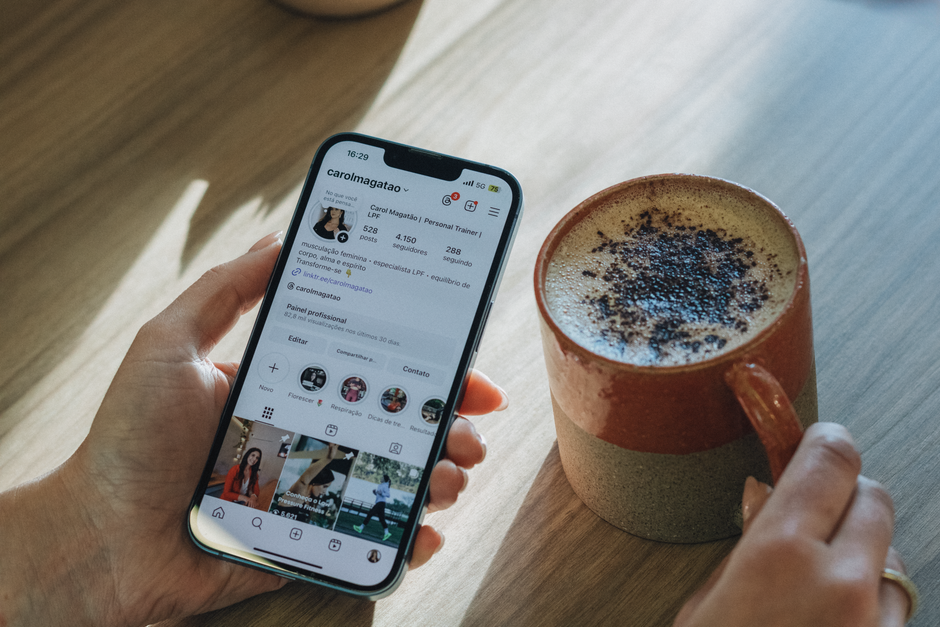
Your audience has a memory, and it is shorter than you think. When you show up every day, you stay in the front of their mind. When you disappear for a stretch, you fall to the back, and the platform follows their attention. People stop seeing you not because they were told to, but because they stopped engaging, and engagement is what keeps you in rotation.
This is where most creators trip. They treat posting like a mood. Inspired week, five posts. Busy week, nothing. From the inside it feels like you are still in the game because you are still thinking about content. From the outside, to your audience and to the platform, you went dark. The feed does not grade effort. It grades output.
Consistency is not about volume either. You do not need to post ten times a day. You need to post on a rhythm your audience can count on, and you need to hold that rhythm through the weeks where you do not feel like it. The creators who win are rarely the most talented. They are the ones who kept showing up after the novelty wore off.
One Platform Means One Point of Failure
Now the bigger issue, the one that hides underneath the consistency problem. If your whole presence lives on a single app, you are completely exposed to that app's every mood swing. A test rollout, a feature change, a shift in what the feed favors that month, and your numbers move with it. You did nothing different, but your reach cratered, because you bet everything on one table.
This is the quiet reason behind a lot of engagement drops. It was not that your content got worse. It was that the one platform you depend on had an off stretch, and you had no other surface absorbing your work. When you are narrow, you feel every fluctuation at full strength. There is no cushion.
Spreading across platforms changes the math entirely. When the same piece of content is living on TikTok, YouTube, Instagram Reels, Facebook, Rumble, and Reddit at the same time, a dip on one is not a dip on your business. TikTok has a slow week, but YouTube is climbing. Instagram throttles a format, but Reddit sends a post to the front of a community. The lows on one platform get covered by the highs on another, and your overall engagement stops swinging wildly with the temperature of a single app.
Let us put your content on 7+ platforms so one bad week never sinks you

Distribution Is the Lever, Not More Content
Here is the trap creators fall into when the numbers dip. They assume the fix is better content. So they spend more hours per post, chase higher production, burn themselves out making fewer, fancier things. And the numbers still do not move, because the problem was never the content. It was that the content only had one place to land.
You already make enough. The piece you posted to one feed this morning could have gone to six. Same video, same caption energy, reformatted and dropped where each platform wants it. That is not more work in the way people fear. It is more return on the work you already did. Most creators are sitting on a back catalog that only ever saw one audience. That is the waste. Not the quality, the reach.
When you treat distribution as the main lever, the whole game gets easier. You stop trying to make each individual post a home run. You let volume across platforms do what perfectionism on one platform never could. Ten good posts spread across six surfaces will beat one great post stuck in a single feed every single time. The math is not close.

What Showing Up Everywhere Actually Looks Like
This is not about being glued to six apps all day. Nobody can do that, and the ones who try quit inside a month. It is about building a system where one piece of content becomes six placements without six times the effort. You create once. You adapt the format to each platform. You post on a steady rhythm so the algorithms on every surface learn your pattern and reward it.
That is the entire shift. Stop measuring your presence by what one platform did this week. Measure it by how many surfaces your work is touching and how reliably you keep showing up on all of them. When you do that, a single platform's bad month becomes a footnote instead of a crisis. Your engagement gets steady because your distribution got wide. The dips stop scaring you because no single dip can take you down.
The creators who never seem to have these panics are not lucky and they are not algorithm whisperers. They are everywhere, consistently, and they made it a system instead of a scramble. That is the whole secret. Go wide, stay steady, and stop handing the algorithm credit for a problem that was always about where you chose to show up.
Build a posting system that runs across every platform for you
