
Hiring a Video Editor Before You Fix Distribution Is Spending Money to Lose Faster
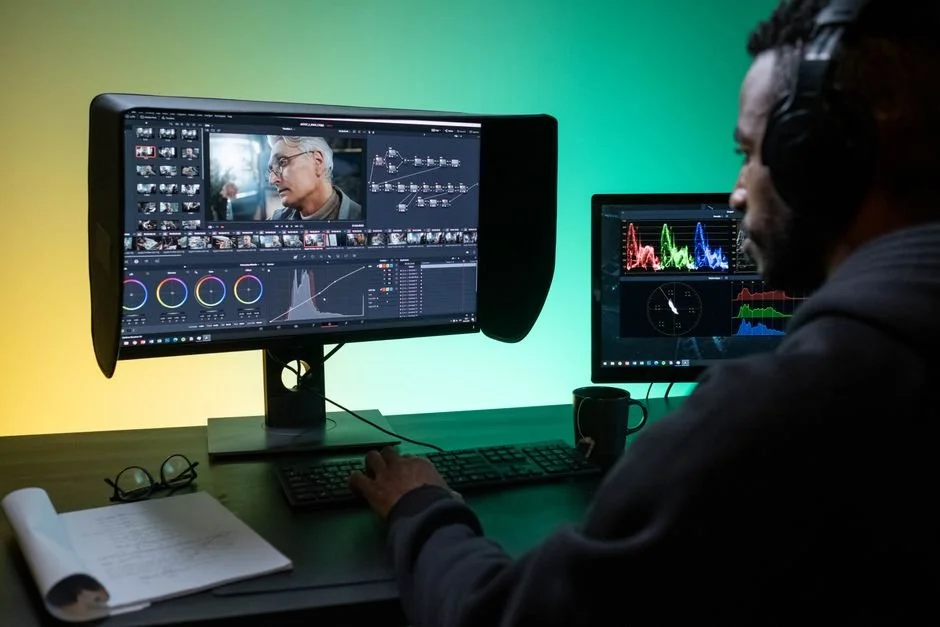
Here is the order of operations almost every creator and brand gets backward. They feel stuck, growth is flat, and the first thing they reach for is a video editor. Better cuts, cleaner transitions, sharper color, snappier captions. The logic feels right. If the content looked more professional, more people would watch it, and the account would finally take off. So they spend money to fix the polish before they ever fix the part that actually decides whether the video gets seen at all.
That instinct costs you. A perfectly edited video that 200 people see still loses to a rough, handheld, one-take video that 200,000 people see. Reach is the multiplier. Editing is a coefficient applied to whatever reach you already have, and if your reach is small, you are multiplying a tiny number by a slightly larger one and calling it progress. The bottleneck is not how the video looks. The bottleneck is how many places it lives and how many people ever get the chance to scroll past it.
If you only change one thing this quarter, change the math on how widely each video travels. See how we put one video everywhere it can win

Editing Improves The Floor, Distribution Raises The Ceiling
Think about what editing actually does. It raises the floor on quality. It makes sure the hook lands in the first second, the pacing does not drag, and the audio is clean enough that nobody bounces out of confusion. Those are real things and they matter. But they all operate on the same fixed audience. Editing makes a higher percentage of the people who already saw your video stick around. It does not, on its own, put your video in front of more people.
Distribution is the opposite. It raises the ceiling. When the same video goes out on TikTok, YouTube, Instagram Reels, Facebook, Rumble, and Reddit instead of one platform, you are not improving the video at all. You are improving how many separate audiences get a shot at it. Each platform has its own recommendation system, its own pool of viewers, its own random chance of catching fire on any given day. One video posted in six places gets six independent rolls of the dice. One video posted in one place gets one.
A video editor cannot give you more rolls of the dice. They can only make the single die you are already rolling slightly nicer to look at. That is the trade you are making when you pay for editing before you fix distribution, and it is a bad trade when your reach is the thing holding you back.
The Math Nobody Wants To Do
Run the numbers and the misallocation becomes obvious. Say you post one video a day on a single platform and average 1,000 views per post. You hire an editor, the work gets cleaner, and your retention improves enough to push you to 1,400 views per post. That is a 40 percent lift, which sounds great. You went from 1,000 to 1,400 views.
Now take that same original 1,000-view video and put it on six platforms instead of one. Even if five of those platforms underperform and only average 600 views each while your main one holds at 1,000, you are now at 4,000 views from the exact same piece of content. No new filming. No editor. No extra production time. Just the same video, distributed.
The edited single-platform version got you 400 extra views. The distributed rough version got you 3,000 extra views. Same effort on the creative side, wildly different output, and the gap only widens as one of those six platforms eventually hits and sends a video to 50,000 or 200,000 people. That breakout almost never comes from the platform you have been grinding on. It comes from the one you were ignoring because you only had bandwidth for one. Distribution is where the asymmetric upside lives. Editing has a hard cap. Reach does not.
A Polished Video Seen By Nobody Is Still Seen By Nobody
There is a quiet trap in chasing production quality, and it is that polish feels like work. You can see the before and after. The video looks better, so it feels like you moved the needle. But the audience never sees the before and after. They only see the after, and only if the after reaches them. A video nobody watches is worth zero regardless of how it was cut. The most expensive edit in the world applied to a video with 80 views is 80 views.
Worse, premium editing slows you down. A good editor needs raw footage, revisions, turnaround time. Your posting cadence drops because each video now takes three days instead of one. You traded volume and reach for polish, which is exactly the wrong direction when you are still small. At the early stage your single biggest growth lever is shots on goal. More videos, in more places, more often. You cannot out-edit a volume and distribution problem.
If your videos are clean enough that people are not bouncing out of confusion, your editing is already good enough to grow on. The next dollar belongs to reach, not polish.
Get every post onto all 7 platforms without the extra work
What "Fix Distribution" Actually Means
Fixing distribution is not vague. It is a concrete set of moves. It means taking every single video you make and getting it onto TikTok, YouTube Shorts, Instagram Reels, Facebook, Rumble, and Reddit, formatted correctly for each, ideally same-day so you ride whatever the algorithms are favoring that day. It means not letting a finished video sit on one platform while five others get nothing. It means treating each piece of content as something you repurpose across every surface instead of something you post once and abandon.
The reason most people do not do this is that it is tedious. Downloading, re-uploading, rewriting captions for each platform, handling different aspect ratios, remembering to actually post on the platforms you do not check daily. It is real time, and it eats the hours you would rather spend filming. So people skip it, default to their one comfortable platform, and then go looking for an editor to explain why growth is slow. The editor was never the answer. The five empty platforms were.
This is the entire reason crossposting exists as a service. The manual version of multi-platform posting is exactly the kind of repetitive work that makes people quit and retreat to one channel. Take that friction away and distribution stops being a chore you avoid and becomes the default for every video you make.
The Right Order Of Operations
So here is the order. Get your filming to acceptable, not perfect. Make sure the first second hooks and the audio is clean. That is your editing baseline and it is enough to start. Then pour everything else into distribution. Post daily, post everywhere, give every video its six independent shots at finding an audience. Watch which platform overperforms for your specific content, because it is usually not the one you assumed.
Once you are distributing wide and consistently and you are actually pulling real reach across multiple platforms, then a video editor starts to make sense. At that point you have a large audience, and improving retention by even a few percent translates to thousands of additional watch-throughs because the base number is finally big. Editing is a great investment applied to scale. It is a poor investment applied to a single small audience. The polish should come after the reach, never before it.
The brands that grow fastest are almost never the ones with the best-looking videos. They are the ones whose content is simply in more places, more often, getting more chances to be discovered. Production quality is a tiebreaker between two videos competing for the same viewer. Distribution decides whether the viewer ever exists. Fix the part that creates viewers first. Then make the videos prettier for the larger audience you have earned.
Stop posting to one platform and start posting to all of them
