
You Pay A Retainer For Content That Only Ever Reaches One Audience

The invoice comes on the first. You look at it, you feel the small monthly flinch, and you approve it, because the work is genuinely good. The videos look sharp. The color is right. The captions are clean and the pacing is better than anything you would produce yourself.
Then you scroll your own feed and try to work out what that money bought you this quarter, and the honest answer is twelve nice looking videos on one platform, most of which did numbers that would be embarrassing to say out loud.
The production is not the problem. You are paying a good rate for good work and then wasting most of what it produces.
You Are Buying Production And Assuming You Bought Reach
This is the mix up at the center of it.
Creative work and distribution are two different services and they are not usually sold together. An editor makes something good. An agency makes something good and often manages one account with it. Neither of those is a promise that the finished thing will end up in front of the maximum number of people, and neither is usually priced as if it were.
So the engagement ends where the file is delivered and approved. What happens after that, which is the part that determines whether any of it produces business, quietly becomes your job. And your job is running a company, so it gets done poorly.
The result is that you are paying premium rates for the input and then applying an amateur process to the step that decides the output.
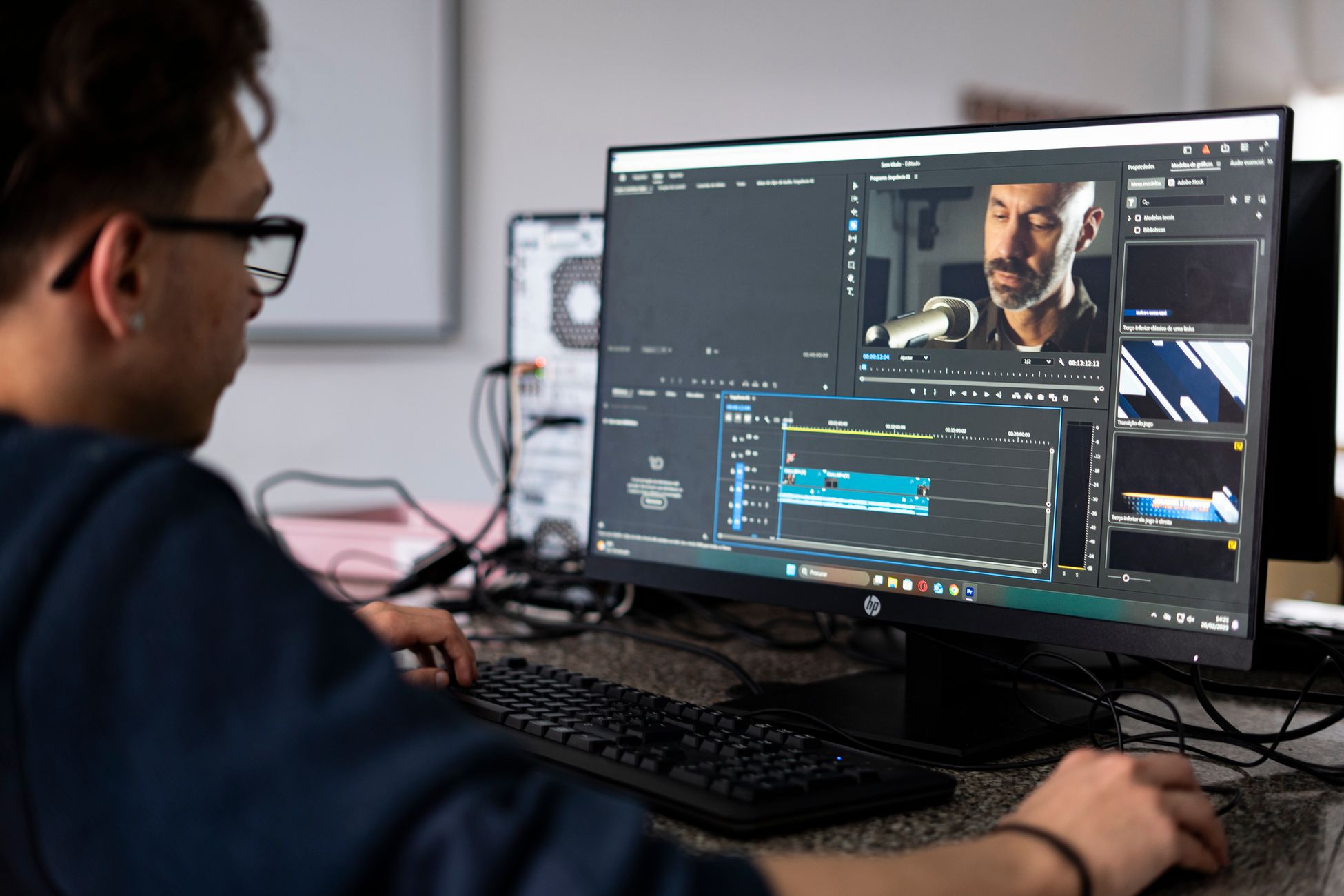
The Cost Per Person Reached Is The Number That Should Bother You
Do the arithmetic and it gets uncomfortable fast.
Say the retainer produces twelve videos a month. Say they go to one platform and average a few thousand views each. Divide the retainer by the total people reached and you get a cost per view that would make you cancel an ad campaign immediately.
Now take those same twelve videos and put them on seven platforms. You have not paid the editor another cent. The production cost is identical. But the number in the denominator is several times larger, so the cost per person reached drops by the same factor.
That is not an optimization. That is the same expense buying multiple times the result, and the only thing standing between you and it is the mechanical work of getting each file into each place.
Good Content Dying On One Platform Is Still Dying
There is a particular frustration in this that is worth naming, because it is what usually drives people to cancel the retainer.
You look at the numbers, see modest reach, and conclude the content is not working. So you cancel, or you switch providers, or you decide social media is not for your business. Then you try again in eight months with somebody cheaper and get the same result, which confirms the theory.
The content was probably fine both times. What did not work was putting professionally made assets through a distribution process that reaches a single audience and then judging the assets by the outcome.
Any given platform will bury plenty of good videos. That is normal. Any one algorithm is one opinion, formed on incomplete information, on a particular day. The same video getting seven independent chances is a fundamentally different bet from the same video getting one, and it is the only version of the bet where quality reliably shows up in the numbers.

Ask What Actually Happens After Delivery
If you have a retainer right now, there is a specific question worth asking, and the answer will tell you a lot.
Ask where each deliverable goes. Not where it could go, where it actually goes. How many platforms, published by whom, on what schedule, and who is responsible if it does not happen.
The common answers are revealing. Sometimes it is one platform, full stop. Sometimes it is two, with the second one getting a version that was clearly resized without care. Sometimes it is the files go to your shared folder and you take it from there, which means it is on you, which means it is happening inconsistently at best.
None of that is dishonest. It is just a boundary that was never made explicit, and it happens to sit exactly where the value either gets realized or lost.
One Platform's Verdict Should Not Grade Your Editor
There is a quieter damage this does, beyond the wasted reach.
When everything goes to one platform, that platform's numbers become the only feedback loop your creative work has. A video underperforms there, so you tell the editor to change the approach. Another one underperforms, so you change it again.
You are steering production based on a sample size of one audience, on one app, with one set of preferences and one algorithm having one kind of day. That is not enough information to make good creative decisions with, and it leads to chasing whatever that single platform happened to reward last month.
Run the same videos across seven platforms and the feedback gets far more honest. You see which pieces work broadly and which only worked in one room, and you stop rebuilding your creative strategy every time a single feed has an opinion.
The Same Applies If You Are Doing It Yourself
Not everybody has a retainer. Plenty of people are the retainer, spending their own evenings shooting and editing.
The math is worse in that case, not better, because you are paying with the scarcest thing you have. Three hours of your Sunday is not free just because no invoice was generated. It is the most expensive labor in your business, and putting the output of it on one platform is the same waste with a higher hourly rate.
Whether the production cost is money or your weekend, the ratio is what matters. High cost to produce, near zero cost to distribute more widely, and you are choosing not to.

Fix The Cheap Half, Not The Expensive Half
The instinct when content underperforms is to spend more on production. Better camera, better editor, more polish, a hook consultant, whatever the current advice is.
That is spending more on the half that is already good and already expensive, hoping it overcomes a bottleneck that lives somewhere else entirely.
The other half costs a fraction of the first and multiplies everything the first half produces. It does not require better ideas or more filming days or a bigger budget for the editor. It requires that finished work reliably ends up everywhere it could be seen, every time, without depending on you to remember.
You are already paying for the hard part. You are already paying for the part that requires skill and taste and hours in an editing timeline. Letting all of that land in one feed, once, and then judging the whole exercise by what that one feed decided, is the most expensive mistake in the entire arrangement.
The invoice is not the problem. What happens to the files afterward is.
