
The Weather Ruined Your Job And Made Great Content
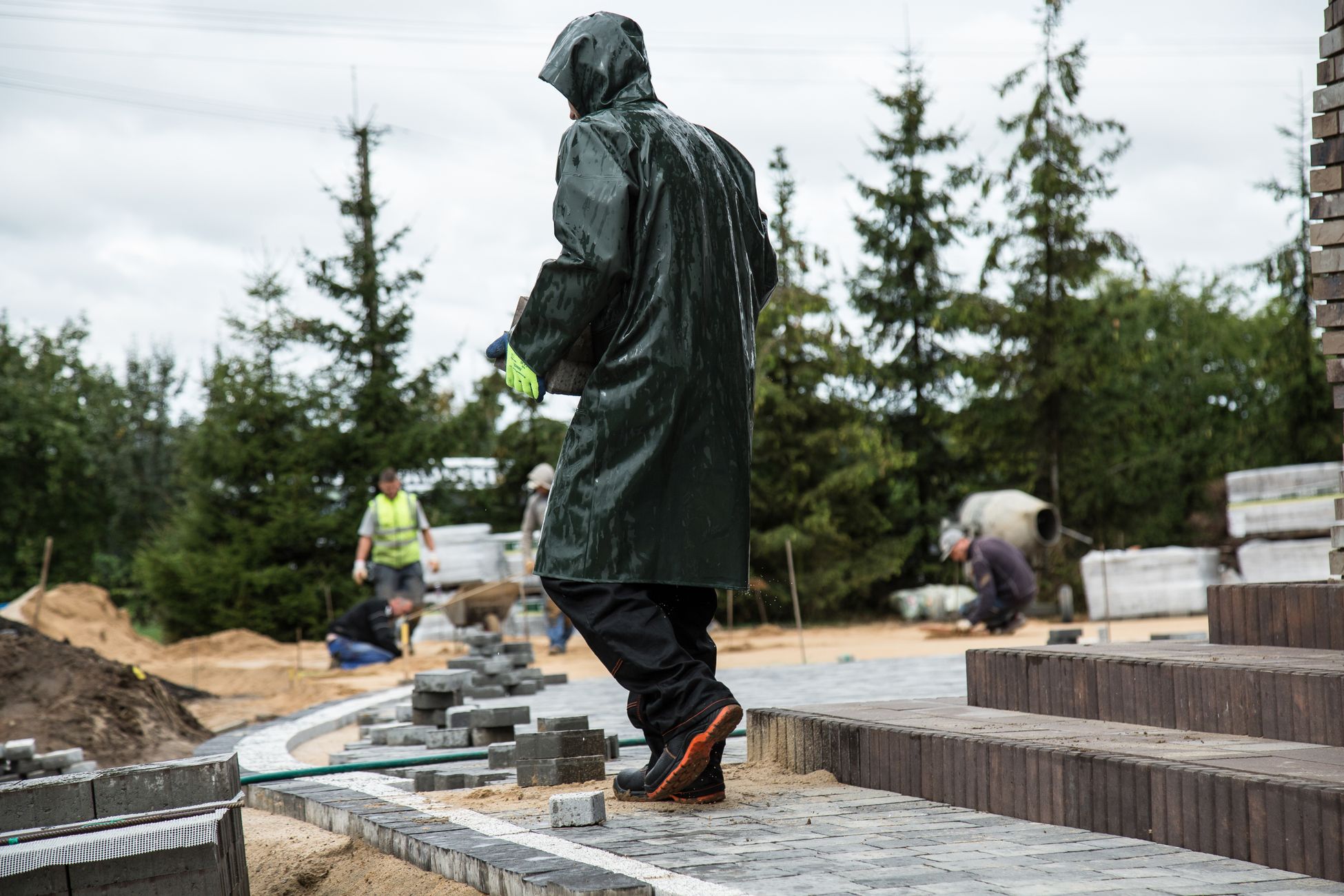
The forecast was wrong. It came in sideways at ten in the morning and the whole day went to pieces. You tarped what you could, moved what would not survive, sent people home, and spent the afternoon calling customers to reschedule.
Total loss of a working day. And the best raw footage you have had in months, which you did not shoot.
Bad weather is the thing your customers understand most immediately and see least often. They know what rain is. They have no idea what rain does to your schedule, your margins, or the way you sequence a job, and the gap between those two is where all the interesting content lives.
Disruption Is Watchable, Routine Is Not
Your normal content has one problem it cannot solve on its own. It shows things going well. Things going well have no tension, and without tension viewers scroll.
A bad weather day has tension built in. Something is at stake, a decision has to be made under pressure, and the outcome is uncertain. You do not have to manufacture any of that. You just have to have the camera out while it happens.
And the platforms respond to it. Weather content travels beyond your normal audience because everyone has an opinion about weather, which means people who have no interest in your industry will still stop on a video of your crew scrambling in a downpour. That is the cheapest reach expansion available to you and it shows up on your calendar a dozen times a year uninvited.
The Decision Is The Story
The footage of rain is the hook. The content is the judgment call.
Why you stopped rather than pushing through. What would have gone wrong if you had continued. What the customer wanted versus what you told them. How much a rain day costs you and who eats it. Why you will not let a crew work in certain conditions even when the customer is annoyed.
That last one in particular is a trust builder that no advertisement can replicate. A prospect watching you refuse to do substandard work under pressure learns something about you that they will not learn from any amount of finished-work photography.
There is also a practical education angle. Most customers have never been told why weather matters to your process. Explaining that a material will not cure, or a surface will not bond, or a measurement will not hold, converts a frustrating delay into evidence that you know what you are doing. The customers who get that explanation publicly, before it happens to them, are dramatically easier to reschedule.
One Rain Day, Every Platform
Here is how a ruined Tuesday distributes.
The chaos clip, thirty seconds of tarps and wind and people moving fast, is short form. TikTok, Reels, Shorts. Massive reach potential, zero skill required, and it works because it is real.
The explanation video is YouTube. Why weather stops this kind of work. People search that, both customers wondering why their job was delayed and peers looking for guidance.
The customer-facing version is Facebook, where your local audience is, framed as an update on what happened today and what it means for the week. That post does customer service work at scale and prevents a dozen phone calls.
Reddit gets the written version in your trade's subreddit, where peers will argue about whether you made the right call. Those arguments are engagement and they establish you as somebody with a position.
Rumble carries the longer footage to an audience the rest never touch.
Same day, same disaster, five or six assets, seven feeds. The day was already a financial loss. This is the only way to get anything back out of it.
Every Kind Of Disruption Qualifies
Weather is the easiest example but the pattern is bigger than weather.
The supplier who delivered the wrong thing. The equipment that failed halfway through. The access problem nobody mentioned until you arrived. The permit that came back rejected. The job where you opened something up and found a completely different problem underneath.
All of these are the same content shape. Something went wrong, you made a call, here is the reasoning. All of them happen constantly. None of them get posted, because your instinct is that problems should be hidden.
That instinct is backwards. Problems handled competently are the single most persuasive thing you can show, because every prospect knows problems are coming and is trying to figure out who handles them well. A feed with no problems in it does not look like a business without problems. It looks like a business hiding them.
The Practical Obstacle
You are not going to stop and set up a shot during an actual emergency. Fair.
The version that works is small. Thirty seconds of footage during the mess, whatever you can grab one-handed. Then, once it is under control and you are in the truck, two minutes of you explaining what happened and what you decided. That is it. The second part is where the value is and it costs you nothing but sitting still before driving off.
Then the real obstacle. That footage sits on your phone, you get slammed catching up the rest of the week because you lost a day, and by the time you have a spare hour the event is stale and you never post it. The content window for a disruption is about seventy two hours, and that window lands exactly when you have the least time.
Which is why this has to not require you. Grab the footage, hand it off, let it hit every platform while you are recovering the schedule. Otherwise it stays a loss with nothing to show for it, the way every rain day before this one did.
Do Not Post It While The Customer Is Still Upset
There is a timing rule here that matters, and getting it wrong turns good content into a complaint about your own client.
If a disruption inconvenienced a specific customer, resolve it with them before you publish anything about it. Somebody who is still waiting for a new date should not discover your content about the delay before they hear from you directly. That is a small thing that feels enormous to the person on the other end.
Sequence it properly. Call the affected customers, set the new plan, then post. The gap is usually an hour, and it entirely removes the risk of looking like you were filming while they were being let down.
Keep the customer out of the framing too. The story is the conditions and your decision, not the person whose day got rearranged. Never post anything that reads as frustration with a client for being annoyed about a genuine delay, even when their reaction was unreasonable. That content always costs more than it earns.
The one exception worth making is when the customer is actively good about it. A short line saying the client was understanding, with their permission, is worth including, because it models the behavior you want from everyone else who ever gets a reschedule call from you.

Next Time It Rains, Hit Record
You know it is coming. It is on the forecast for some week this month.
When it happens, get thirty seconds of the mess and two minutes of your reasoning, then send it to every feed where your customers and your peers already are. Not the one app. All of them.
The day is gone either way. The only choice is whether it produces nothing, or whether it produces the most watchable thing you will publish this quarter across seven platforms.
