
Delivery Day Is Your Best Content And Nobody Films It

There is one moment in every job that beats anything you could script. It is the handover. The keys going across, the reveal, the client seeing the finished thing for the first time, the reaction that happens before anybody remembers to be composed about it.
It lasts about eight seconds and almost nobody films it. Everybody is busy being professional, the client is busy being pleased, and by the time somebody thinks to pull out a phone the moment has already passed into small talk.
That eight seconds is the single most persuasive thing your business produces, and you generate one every time you finish a job. You are manufacturing your best content weekly and throwing all of it away.
Nothing You Can Make Beats A Real Reaction
Think about why it works. Every other piece of marketing you make is you saying you are good. A delivery reaction is somebody else demonstrating it, involuntarily, on camera.
Nobody watching questions whether it is genuine. There is a specific quality to an unrehearsed reaction that people recognize instantly and cannot be faked by a paid actor or a well lit testimonial. It bypasses the part of the brain that discounts advertising.
It also compresses your whole value proposition into a few seconds without a word of explanation. The viewer does not need to understand what you do, what it costs, or how long it took. They see somebody genuinely happy about a thing you made or did, and they understand the entire offer.
That is the hardest thing to achieve in content and you get it handed to you at the end of every project.

The Reason It Never Gets Filmed
The obstacles are real but small, and worth naming because each one has an easy fix.
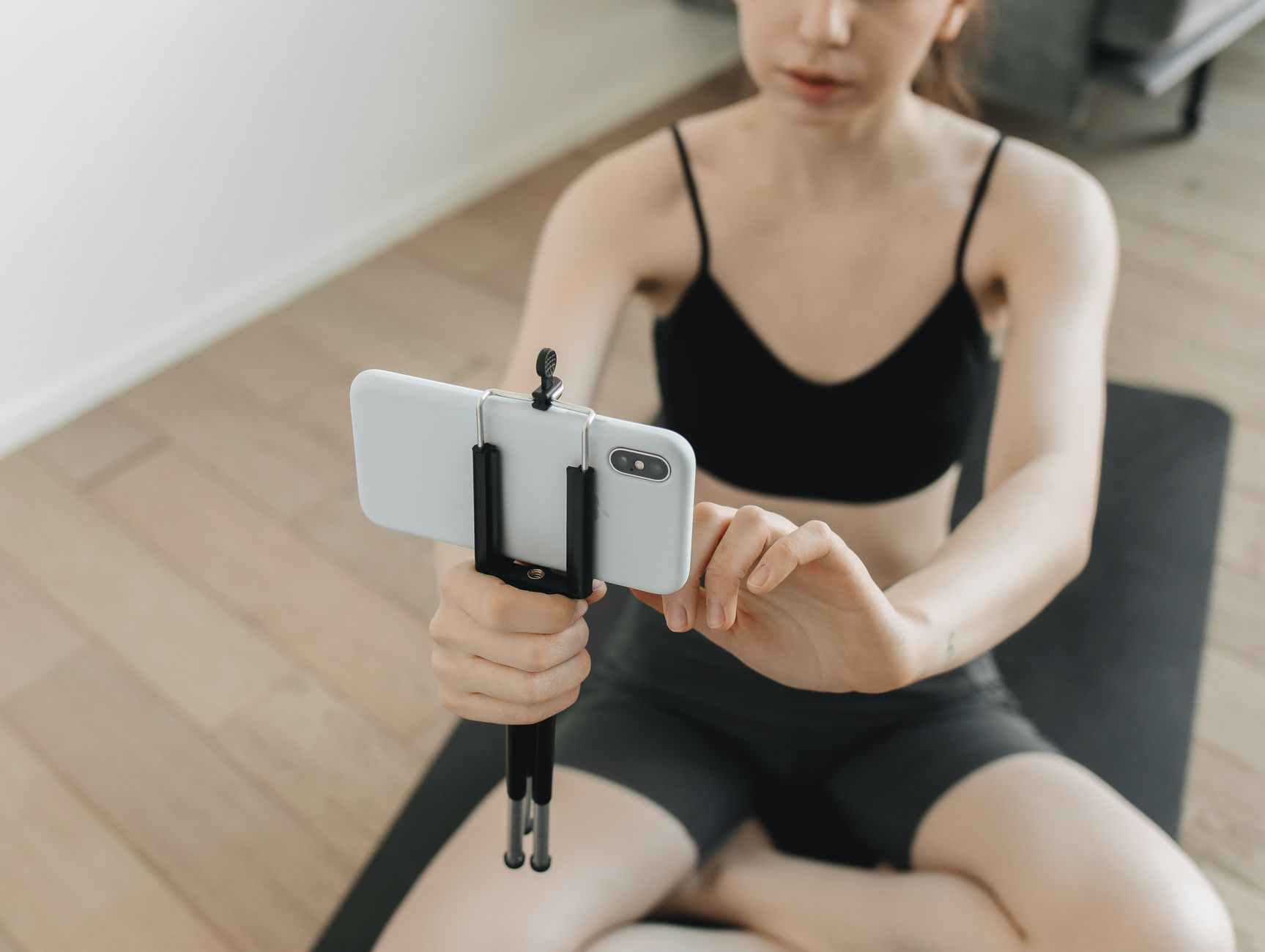
You are focused on the job, not the camera. Fair, but the fix is a phone on a small tripod or propped somewhere, recording before the client arrives. You do not have to operate it. You just have to remember to start it.
It feels awkward to ask. It is much less awkward than you think. Most people are pleased to be filmed at the moment they are happiest with what you did, and asking is one sentence at the start of the job rather than a surprise at the end.
You worry it looks staged. It looks staged when you set it up as a production. It does not look staged when the camera was already running and you captured what happened. The imperfection is the credibility.
And the last one, the honest one, is that filming feels pointless if the clip is going to sit in your camera roll like the last forty did. That is a distribution problem, not a filming problem, and it is the one that actually needs solving.
One Handover Is Not One Post
A delivery moment is not a single piece of content. Filmed properly it is at least four.
There is the reaction itself, short, no context, just the moment. That is the piece with the best chance of traveling far because it needs no setup.
There is the before and after, where the reaction becomes the payoff at the end of a thirty second progression. That one converts better because the viewer understands the scale of the work.
There is the longer version with the client actually talking afterward, which belongs on YouTube where people watch things for more than nine seconds.
And there is the still frame, the photograph of the moment, which does work on Facebook and in every place a photo carries further than a video.
Four assets, from eight seconds, from a job you were doing anyway.
Different Platforms Want This Content In Different Shapes
This is where most people give up the majority of the value.
TikTok and Reels want the reaction cold, immediately, no build up, because people decide within a second whether to keep watching. Facebook wants context, because the audience is older, slower, and more likely to be local, and a caption explaining what the job was makes it shareable inside the community where your buyers actually live.
YouTube wants the whole thing. The problem, the process, the reveal, in a form somebody searching for your service can watch end to end. That version keeps working for years.
Rumble takes the same footage into a far less crowded feed. Reddit takes it as a post in a local or trade community where a genuine result gets engagement that a promotional post never would.
Same eight seconds, five different edits, six or seven feeds. If you only cut the one version you personally like and put it in the one place you personally use, you captured the moment and then wasted most of it anyway.
The Client Becomes A Distribution Channel
There is a second effect that only shows up once you start doing this consistently.
People share content they are in. A client who sees themselves reacting to your work will send that clip to family, post it themselves, and tag you in it. That is reach you did not pay for, arriving inside a network of people who already trust the person sharing it. No ad buys that.
It only happens if the clip exists and if it is easy to find. A video buried on a platform your client does not use gets shared by nobody. The same video sitting on Facebook, where their friends and neighbors actually are, moves through a local network in a way that turns one job into three calls.
That is why breadth matters here specifically. You are not just reaching strangers. You are putting the clip somewhere the person in it can pick it up and carry it further.
Fifty Jobs A Year Is Fifty Chances
Run the numbers on your own volume. Whatever you complete in a year, that is how many of these moments you have access to.
Fifty completed jobs is fifty reactions. Four assets each is two hundred pieces of content. Across six or seven platforms, that is well over a thousand units of distribution, generated entirely as a side effect of doing the work you already do.
You would not need another idea for two years. You would not need a shoot day, a script, a studio, or a content calendar in the usual sense. The calendar would be your job schedule.
The businesses that seem to have endless content are usually not more creative than you. They just decided that the work itself is the content, and then built the habit of capturing it and the system for distributing it.
Start With The Next One
Do not try to reconstruct the last two years of handovers you missed. Those are gone.
Start with the next job. Ask at the beginning, set the phone somewhere it can see faces, and let it run through the reveal. Then do it again on the one after that. Within two months you will have more usable footage than most businesses in your industry have collected in their entire existence.
And make sure every one of those clips leaves your phone and lands in every feed where somebody might be deciding who to hire, because a reaction nobody sees persuades nobody.
Multipost Digital publishes across 7 or more platforms so the best eight seconds of your week reaches every audience instead of one.
