
You're Not Shadow Banned, You're Just Posting on the Wrong Platform
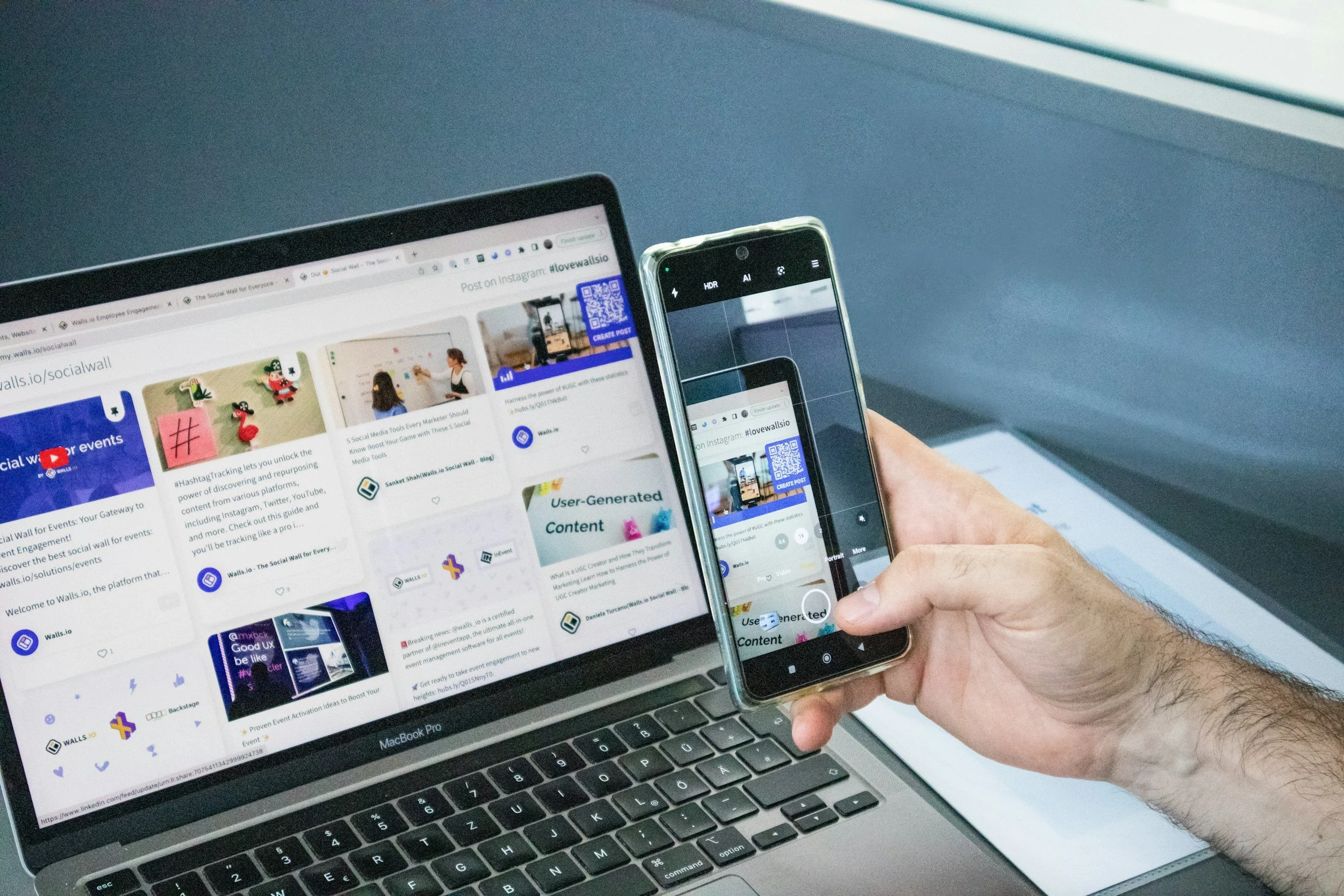
Let's be honest. You've spent hours crafting the perfect post. The lighting was right, the caption was clever, the hashtags were researched. You hit publish and then... nothing. A few pity likes from your aunt and maybe a bot from Eastern Europe. Your first instinct is to panic and assume the algorithm has it out for you personally. But here's the truth most creators need to hear: you probably weren't shadow banned. You were just talking to the wrong room. If you're tired of guessing which platform will work for you, Multipost Digital can handle the posting across 7+ platforms so you never have to choose just one.
The shadow ban conspiracy has become the comfort food of struggling creators. It's an easy explanation that removes personal responsibility and puts all the blame on a faceless algorithm. And while yes, platforms do suppress certain content for various reasons, the reality is that most underperforming posts simply didn't find their audience because their audience wasn't on that platform to begin with. Or the content format didn't match the platform's culture. Or the timing was off. Or all three. The fix is rarely about cracking some secret code. It's about showing up in more places.
This is the core idea behind multi-platform content strategy, and it's exactly why creators and brands who distribute their content widely almost always outperform those who put all their eggs in one algorithm's basket. When your content lives on TikTok, Instagram Reels, YouTube, Facebook, Rumble, Reddit, and beyond, you're no longer at the mercy of any single platform's mood swings. You're building something more resilient.
Why One Platform Is Never Enough Anymore
Think about your favorite restaurant. They probably don't rely on just one source of customers. They're on Google Maps, Yelp, DoorDash, Instagram, and maybe even a good old-fashioned sign out front. They show up wherever hungry people are looking. Your content strategy should work the same way.
The social media landscape has never been more fragmented. Different demographics live on different platforms. Gen Z is on TikTok. Millennials still check Instagram obsessively. Baby boomers are scrolling Facebook. Professionals hang out on LinkedIn. Free speech advocates and niche hobbyists are increasingly active on Rumble and Reddit. If your content only lives in one place, you're systematically ignoring massive chunks of your potential audience.
And here's the kicker: the same piece of content can perform wildly differently depending on where you post it. A video that gets buried on Instagram might absolutely explode on TikTok. A post that gets ignored on Facebook might generate a real community conversation on Reddit. The content isn't the problem. The distribution is.
The Shadow Ban Myth vs. What's Actually Happening
Let's dig into this shadow ban thing a little more, because it's genuinely misunderstood. A shadow ban, in the truest sense, means a platform is hiding your content from non-followers without telling you. Some platforms do this to accounts that violate community guidelines repeatedly. But the vast majority of creators who think they're shadow banned are simply experiencing normal algorithmic suppression, which is not the same thing.
Algorithmic suppression happens when your content doesn't get early engagement signals. Platforms like Instagram and TikTok push content to a small test audience first. If that test audience engages, the content gets pushed further. If it doesn't, it quietly dies. This is not a shadow ban. This is a cold audience problem or a content-platform mismatch problem.
You might be posting fitness content on a platform where the dominant culture is entertainment and comedy. Your ideal customers might be on a different platform entirely. Or your content style, whether it's long-form, educational, opinion-based, or entertainment-driven, might be better suited to a different environment. None of that is a shadow ban. All of it is fixable.
How Repurposing Content Changes the Math Entirely
Here's where things get genuinely exciting. You don't need to create 10 different pieces of content for 10 different platforms. You need to create one solid piece of content and then distribute it intelligently across multiple platforms. That's called repurposing, and it's the single most underutilized strategy in social media marketing today.
A 60-second video you filmed for TikTok can also go on Instagram Reels. The same video can live on YouTube Shorts. It can be uploaded to Facebook and Rumble. If there's a discussion angle to it, you can post it in relevant Reddit communities. Suddenly, one piece of content is working seven times as hard for you.
This matters more than most people realize because the compounding effect of multi-platform presence is enormous. Every platform you're on is another set of search results, another algorithm that can recommend you to new followers, another community that might discover your brand. When you're only on one platform, you're leaving all of that on the table.
The Time Problem and Why Creators Don't Crosspost
If repurposing and multi-platform posting is such a no-brainer, why doesn't everyone do it? Simple. Time. Posting the same video to seven different platforms sounds easy in theory, but in practice it means logging into seven different apps, reformatting content for different aspect ratios and caption lengths, understanding the norms and best practices of each platform, and doing this consistently week after week. Most creators and business owners simply don't have the bandwidth.
So they default to one platform. They dump all their energy into Instagram or TikTok, and when growth stalls, they assume the worst. They think they're shadow banned, or the algorithm hates them, or social media just doesn't work for their niche. When really, the only thing they needed to do was show up in more places.
This is the exact problem that social media management agencies solve. The content creation stays with you, the person who knows your brand and your voice. The distribution, the posting schedules, the platform-specific formatting, all of that gets handed off to a team that does it every day.
What a Real Multi-Platform Strategy Looks Like
Let's paint a concrete picture. Say you're a fitness coach who creates one workout tip video per week. Without a multi-platform strategy, that video goes on Instagram, gets modest reach, and maybe brings in two new followers. With a multi-platform strategy, that same video goes on TikTok where a fitness-hungry algorithm serves it to exactly the right people. It goes on YouTube Shorts and gets picked up in search results months from now. It goes on Facebook where your slightly older demographic actually sees it. It goes on Rumble where an underserved audience of health-focused viewers is waiting. It gets shared in relevant Reddit communities where real conversations start.
Your one video is now six or seven touchpoints with potential clients. Your reach multiplies without requiring you to create six times as much content. Your brand shows up consistently across the entire social media landscape instead of being invisible on most of it.
That's the real power of crossposting. Not just more platforms, but more opportunities for the right person to find you at the right moment.
Stop Blaming the Algorithm and Start Fixing Your Distribution
The algorithm is not your enemy. It is genuinely trying to serve content to people who will enjoy it. Your job is to give it enough chances to find those people. When you're only on one platform, you have one chance. When you're on seven platforms, you have seven chances, and seven algorithms working in your favor simultaneously.
If your content isn't growing, audit your distribution before you audit your content. Ask yourself honestly: how many platforms am I actively posting on? How consistently? Is my content format matched to each platform's culture? Chances are, the content itself is fine. The reach just isn't there yet.
The creators and brands that are winning right now are not necessarily making better content than you. Many of them are just showing up in more places with the same content you're already making.
You don't need to go viral on one platform. You need to be findable on all of them.
