
You Spent Three Hours Editing One Reel and Forty Seconds Posting It, and That Ratio Is Why You're Stuck
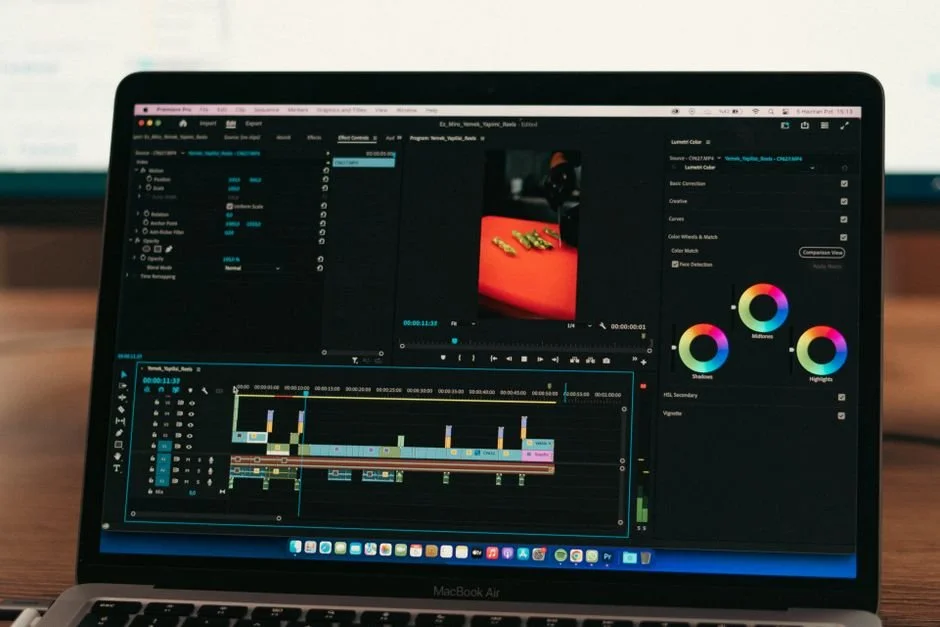
Look at how you actually spend your time. You shot the footage, dragged it into your editor, trimmed the dead air, color graded it, added captions word by word, found a trending sound, synced the cuts to the beat, exported it, watched it back, fixed one frame, exported it again. Three hours, easy. Then you opened one app, typed a caption, picked a few hashtags, hit share, and walked away. Forty seconds. That single video took three hours to make and forty seconds to distribute, and it went to exactly one audience on one platform. You wonder why the view count flatlines. The math you are running guarantees it.
This is the trap almost every creator and brand owner falls into. You believe the bottleneck is content quality. So you pour more and more hours into polishing the thing, convinced the next edit will be the one that breaks through. But the people who are actually growing are not better editors than you. They are better distributors. They take one piece of work and put it in front of seven, ten, fifteen different audiences while you put yours in front of one and hope. The fix is not a better edit. The fix is flipping the ratio, and if you want that handled for you across every platform that matters, this is exactly what we built.
See how we put one video everywhere for you
The Time Math Is Completely Backwards
Run the numbers honestly. If a reel takes you three hours to produce and forty seconds to post, you are spending 99.6 percent of your effort on creation and almost nothing on distribution. Now think about what each side of that actually returns. A better edit might earn you a few extra percentage points of watch time. Putting that same video on a second platform doubles your potential audience. Putting it on a seventh platform multiplies your reach by a factor that no edit on earth can match.
The asset you already made is the expensive part. You paid for it in hours. Leaving it on one platform after all that work is like printing one copy of a book you spent a year writing and putting it on a single shelf in a single store. The writing was the hard part. The copies are cheap. Yet creators treat distribution like an afterthought, a forty-second tax at the end of the real work, when distribution is the part that decides whether anyone sees the real work at all.
One Audience Versus Seven Audiences
Here is what most people miss about platforms. The person scrolling TikTok at lunch is not the same person watching YouTube at night, and neither of them is the person checking Facebook on the weekend or browsing Reddit when they are bored. These are different humans with different habits on different apps. When you post to one platform, you are not reaching "the internet." You are reaching one slice of it, and a small slice at that.
Post the same video to TikTok, YouTube, Instagram Reels, Facebook, Rumble, and Reddit and you are not repeating yourself. You are introducing your work to six audiences who would never have crossed paths otherwise. The TikTok crowd never saw the YouTube version. The Reddit thread never knew the Instagram clip existed. Each platform is a fresh room full of people who have not met you yet. The same forty seconds of effort, multiplied across rooms, is the entire difference between a video that gets a few hundred views and one that gets seen.
And the algorithms do not punish you for this. Each platform only knows what happens inside its own walls. A video that flops on one app can take off on another, because the audiences and the recommendation systems are completely separate. You only find out which platform was going to love your video by actually putting it there.
Repurposing Beats Perfecting Every Time
Stop trying to make one perfect upload. Start making one good piece go everywhere. The creator who posts a solid video to seven platforms beats the creator who posts a flawless video to one, and it is not close. Volume of distribution wins over polish of production almost every single time, because reach compounds and polish does not.
Think about what perfecting actually buys you. You spend an extra hour shaving frames and adjusting the grade, and the result is marginally better than it already was. Nobody scrolling past at full speed notices the difference. Meanwhile, that same hour spent moving the video onto three more platforms could put it in front of thousands of new people. One path improves a thing nobody is comparing. The other path finds the audience that was going to share it. You know which one moves the needle.
This is the shift that separates creators who plateau from creators who climb. The plateau crowd keeps sharpening the same blade. The climbers take what they already made and get it in front of as many people as possible, then make the next thing. They are not working harder on each video. They are working smarter on where each video lands.
Why You Keep Doing It Anyway
If repurposing is so obviously better, why does everyone still pour hours into one upload? Because posting to seven platforms by hand is genuinely miserable. Different aspect ratios, different caption formats, different upload screens, different best-posting times, different quirks on each app. Doing it manually turns a forty-second task into a forty-minute one, seven times over, and by the third platform you give up. So you tell yourself one platform is enough and go back to editing, where at least the work feels productive.
That friction is the real reason your distribution is broken. It is not that you do not understand the math. It is that acting on the math by hand is exhausting, so you do not. The answer is to remove the friction entirely, so getting onto every platform costs you the same forty seconds as posting to one. When distribution is effortless, you actually do it, and when you actually do it, the views follow.
Flip the Ratio and Watch What Happens
Picture the same three hours of work with the ratio flipped. You still make the video. But now it goes to TikTok, YouTube, Instagram Reels, Facebook, Rumble, Reddit, and more, all from one place, in the time it used to take to post to one. Suddenly that three-hour edit is working seven times harder. Same effort up front, seven times the reach on the back end. Your view count was never a content problem. It was a distribution problem wearing a content costume.
The creators who figured this out are not more talented than you. They just stopped letting good work die on one platform. They treat every video as something to spread, not something to perfect and abandon. Make the video once, put it everywhere, move on to the next one. That is the whole strategy, and it works because reach is the lever, not polish.
You already do the hard part. You already spend the three hours. The only thing standing between your current view count and a much bigger one is where that video ends up after you hit export. Fix the ratio and the growth you have been chasing through better edits shows up through wider distribution instead. We make that part automatic, so your next video reaches seven audiences for the same forty seconds you were spending on one.
